

The Only Reading Data Tracker You'll Need This Year
- Casey Boehm

- Sep 2, 2025
- 2 min read
Hey teacher friend,
If reading data feels like it’s scattered across five tabs, two websites, and a sticky note on your desk—you are not alone. We’re expected to use all this data to inform our instruction… but where’s the tool that actually helps us make sense of it?
That’s exactly why I created this Reading Data Tracker + Grouping Tool.
This spreadsheet pulls everything together—formative assessments, benchmarks, screeners, running records—into one place where it’s easy to read, easy to sort, and easy to act on.
What Makes It Different?
✅ All-in-one tracking – No more bouncing between sites or PDFs. You input your student data once, and it’s organized automatically.
✅ Group creation tools – Sort and group students by need, level, or skills with just a few clicks.
✅ Progress monitoring built-in – Track how students are moving across time, and quickly spot who needs a reteach or a push.
✅ AI prompt suggestions – Yep—this tool comes with smart guidance to help you actually interpret the data and take action. Think grouping tips, reteach ideas, and ways to use time more efficiently.

Why You’ll Use It All Year
This isn’t a “set it and forget it” type of tracker. It’s the kind you’ll come back to every time you meet with a group, prep for an RTI meeting, or sit down with admin. It gives you:
Clarity on who needs what
Confidence in how you group your students
A smarter, faster way to plan small group instruction
Plus, it works whether you’re using DIBELS, iReady, F&P, MAP, or your own assessments—it’s fully editable to fit your system.
Work Smarter With Your Data
Data is only useful when it’s organized, visible, and actionable. This Reading Data Tracker finally makes that possible. And best of all? It’s simple. No fancy tech skills needed. Just input your scores and start using your time where it matters most: with your students.
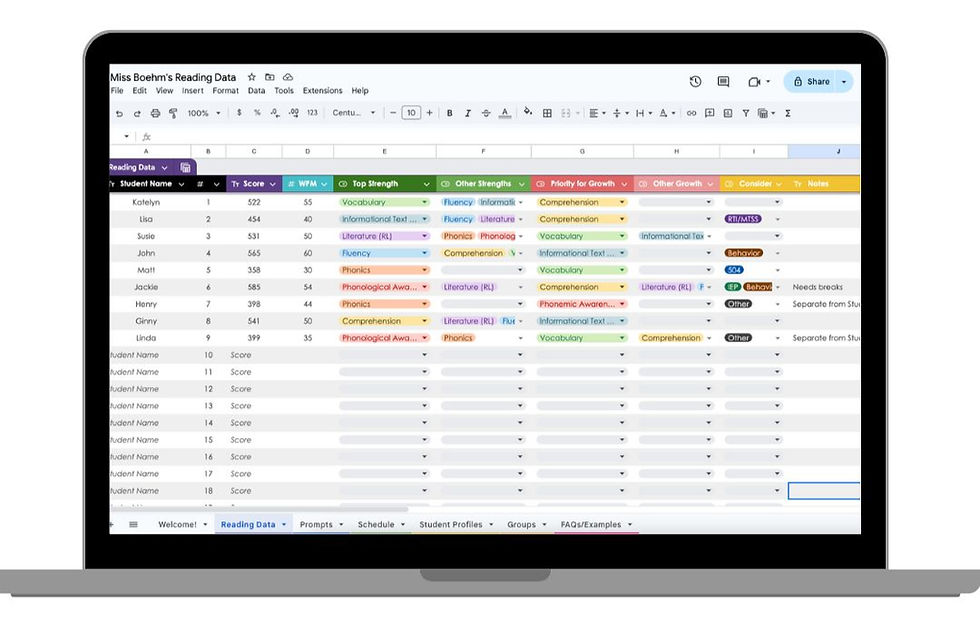
Grab the Data-Driven Reading Groups Template here, and get ready to make your small group planning faster, smarter, and more effective.
You’ve already got the data—now let’s put it to work.


Comments